A solver is a program that finds a near-optimal strategy for a specific spot: which hands to bet, check or fold, and how often. That strategy is called GTO (game theory optimal): it cannot be beaten even by an opponent who knows it by heart.
How a solver works
- You set the spot: both players’ ranges, stacks, pot, board and the bet sizes allowed.
- The solver plays itself millions of times. The algorithm (usually counterfactual regret minimisation, CFR) nudges the strategy after every iteration towards the actions that would have earned more.
- The strategy converges to equilibrium. Accuracy is measured as exploitability: what share of the pot a perfect opponent could win against it. A good solution is a fraction of a percent.
- You get an answer for every hand: for example, bet KQ on this flop 70% of the time and check 30%.
Mind the limit: a solver is only optimal for the inputs you give it. If the ranges or bet sizes are off, the answer is an exact solution to an inexact problem.
Popular solvers and trainers
| Program | What it does |
|---|---|
| PioSolver | The classic Hold’em solver for Windows: solves postflop spots from your inputs. The professional standard. |
| GTO+ | A Hold’em solver for Windows, similar to PioSolver in features but simpler and cheaper. |
| Simple Postflop | A Hold’em solver focused on ease of use and study. |
| MonkerSolver | A solver for Omaha and multiway pots, including preflop. |
| GTO Wizard | Runs in the browser: a library of precomputed solutions, a trainer and hand analysis. Has a limited free mode. |
| Flopzilla | Not a solver but range analysis: how often an opponent’s range hits the board. |
Prices and plans change, so they are not listed here: check the developers’ sites.
How to study with a solver
- Start with common spots. A flop bet after raising preflop, heads-up pots — situations that repeat hundreds of times.
- Look for patterns, not numbers. You cannot memorise frequencies for every board. Understand which boards get frequent small bets and which get rare big ones.
- Compare with your own hands. Run a close hand through the solver and find where your decision differed most.
- Remember your opponents. GTO protects you against strong players. Against weak ones, play that punishes their mistakes earns more.
Solvers are banned during play
Programs that suggest decisions during a hand are called RTA (real-time assistance). Poker apps and clubs ban them and close the accounts of players who use them. Solvers and calculators are tools for review after the game.
Trainer: learn to read hands
Before a solver, build the basics: seeing quickly which hand is stronger. Try Hold’em, then switch to Omaha, where a hand uses exactly two hole cards and three board cards:
Trainer: which hand wins?
Correct 0 of 0
Board
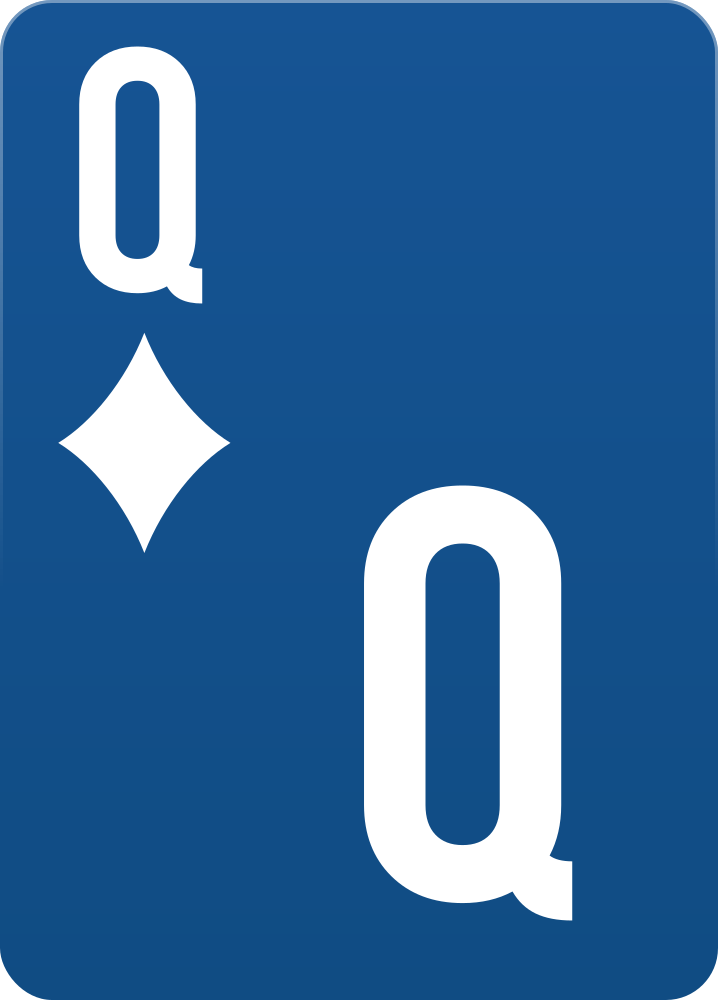
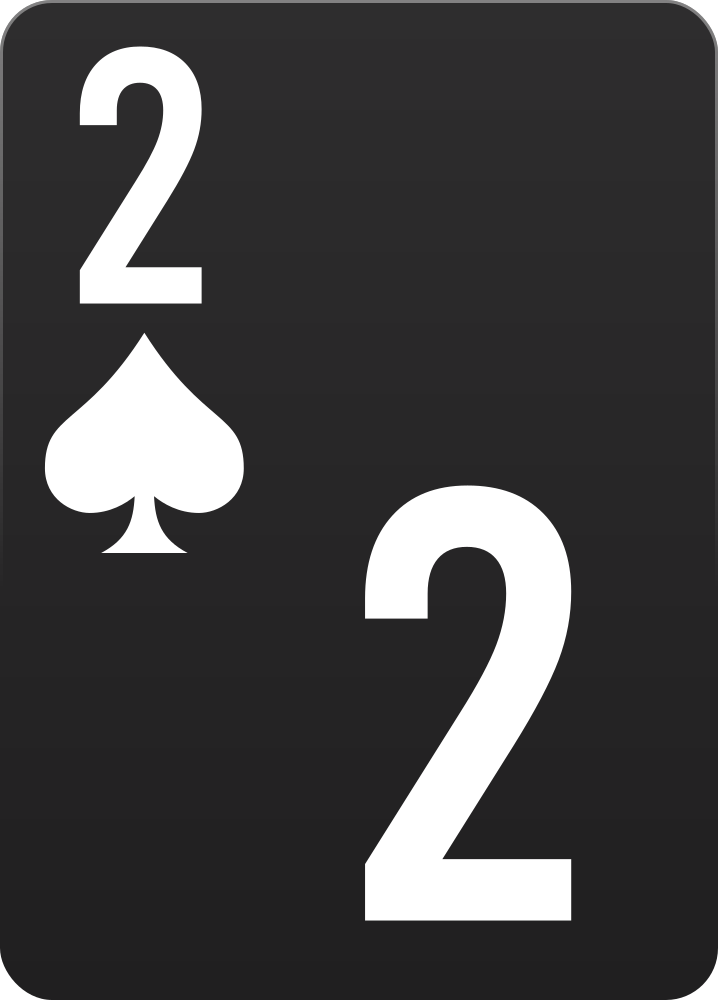
Hand A
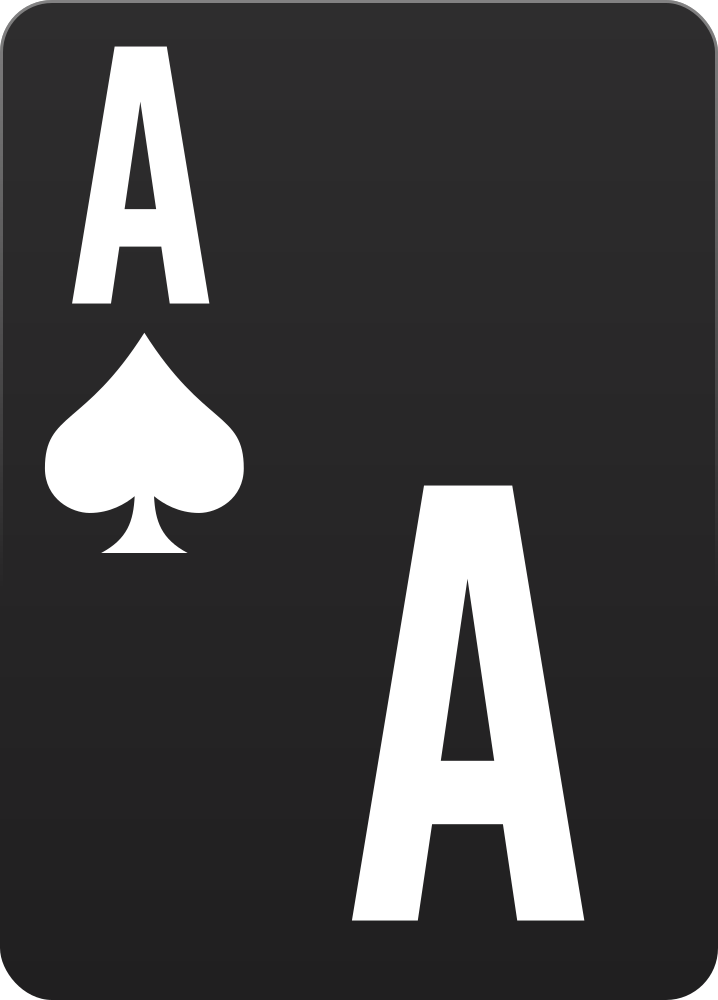

Hand B
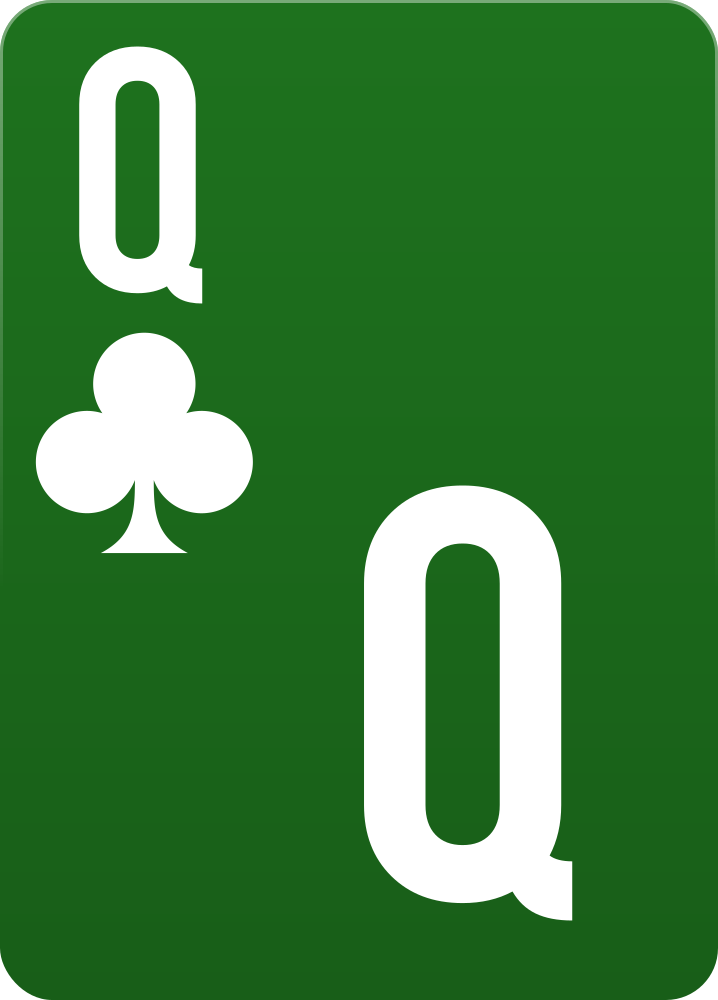
Free ways to practise
- The poker odds calculator: equity, outs and pot odds for Hold’em and Omaha.
- The outs calculator: drill the rule of 2 and 4.
- Free modes of trainers: many allow a limited number of hands a day.
- Reviewing hands with friends: arguing over close decisions teaches as well as software.
FAQ
A program that finds the optimal strategy for a given spot: which hands to bet, check or fold, and how often.